
ProjectS 2025 (sorry)
memoir of a busy year

2025 was a remarkably eventful year.
I’m hardly the only one saying so as we ring it out, but most writers are referring to what a jampacked disaster the year was in global politics and our historic steps backward in human progress. I am an addict of political news, likely more hooked into that feed than may be healthy. But the despair of the first year of Project 2025 made many pull back from the firehose of shame and misery with which the administration has flooded the zone, and I was no exception. I’m no less informed than in past years, but I haven’t spent nearly as much time seeking out headlines or playing the news into my ears.
In place of the doom I’ve filled 2025 with projects of my own: giving my hands, head and heart something else to hold and focus on, not least starting to publish these too-many-words/too-much-Tom memoirs. So I actually mean it’s been eventful personally, and though I am not ignoring the unprecedented suffering my country has inflicted this year–on its own people, on the world, on history–I admit somewhat guiltily that for me personally it’s been a fruitful, even positive 2025.
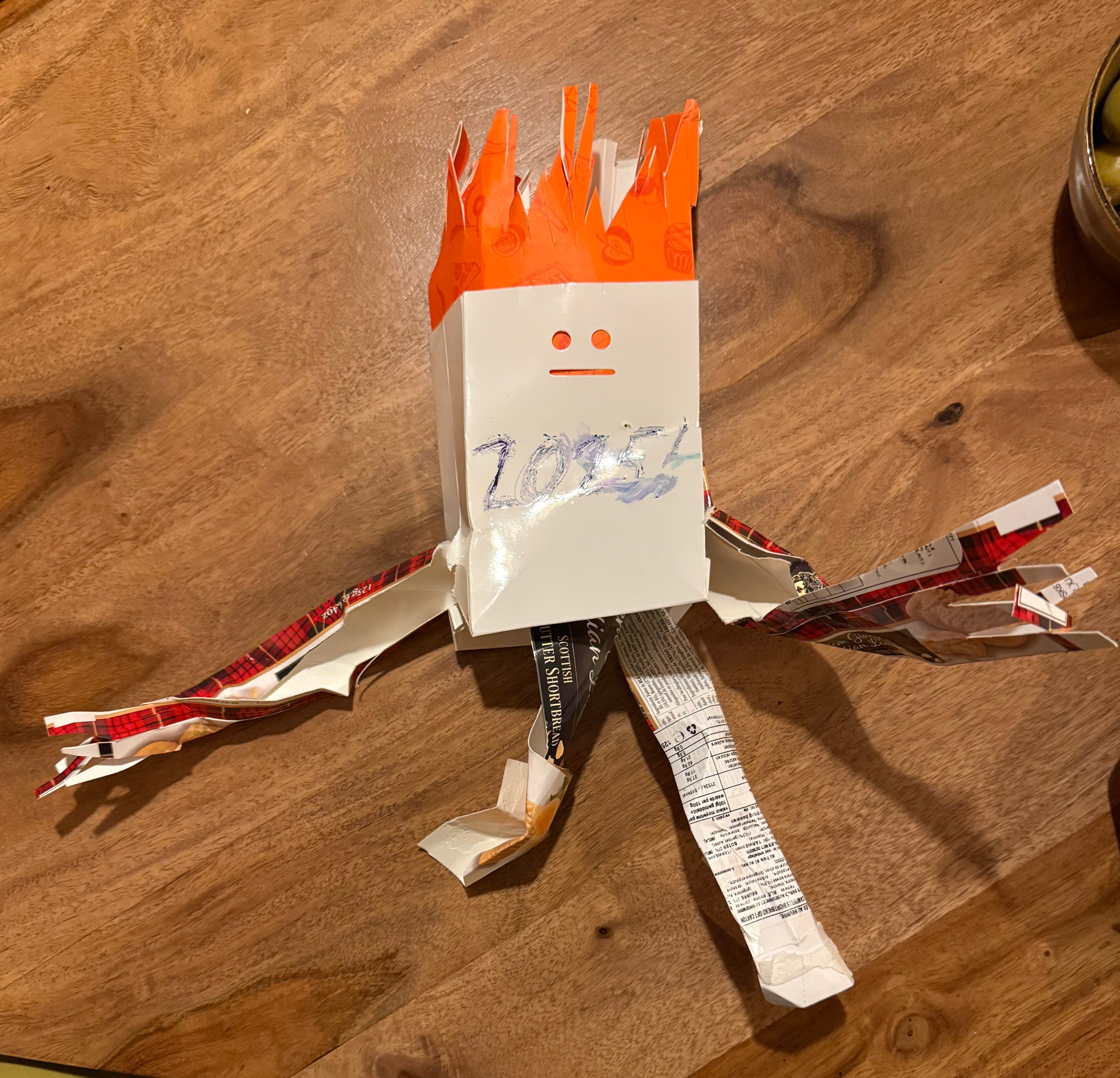
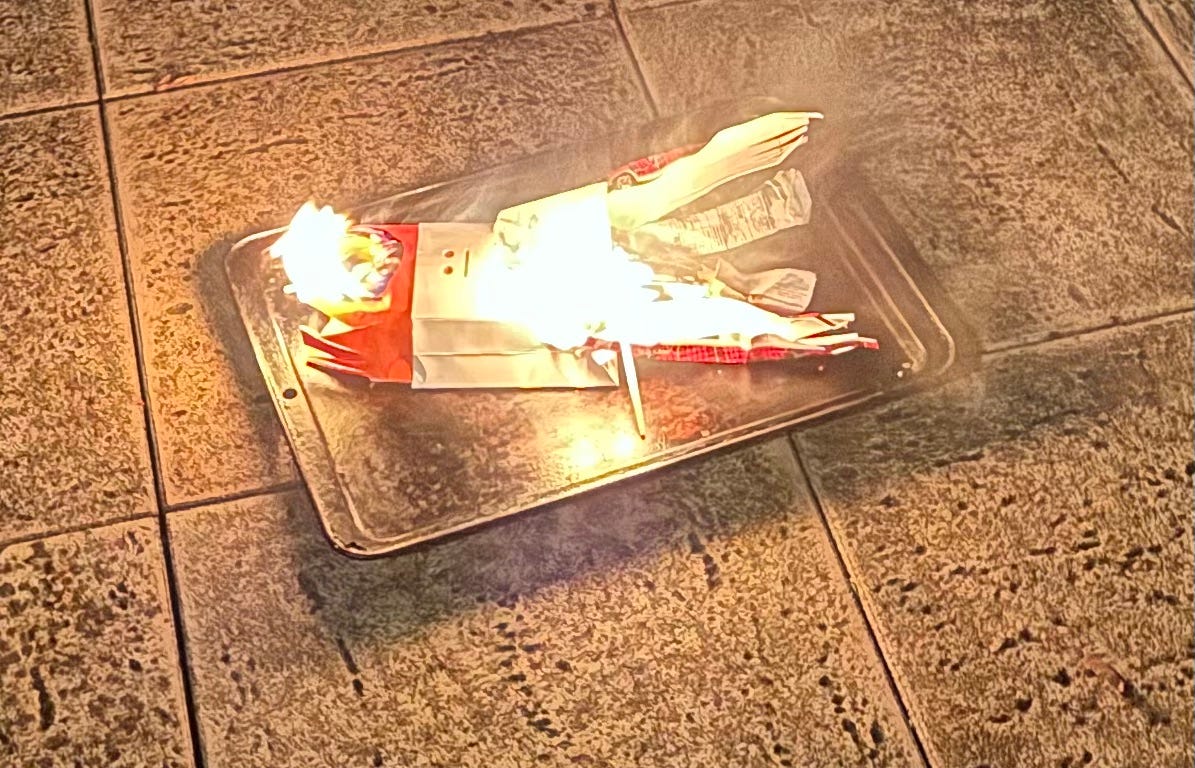
Not at all coincidentally to my incongrous positivity in the midst of a miserable year to be an American, I no longer live in the belly of the beast where I’m from, but in Europe. This was our sixth year living here in Brussels, which allowed us to 1) achieve permanent residency; 2) quit the jobs that granted us that residency; 3) retire from the careers that led us to those jobs; 4) effectively retire in Europe; 5) start traveling, both to the US and across Europe, on a non-school-bound calendar, for the first time in decades. All of which was likely to put us in a good mood, and I can admit that the physical distance from the inferno in Washington–not that we’re safe here from its path of destruction–has also given our spirits half a chance at happiness despite the poor mental health of our country.
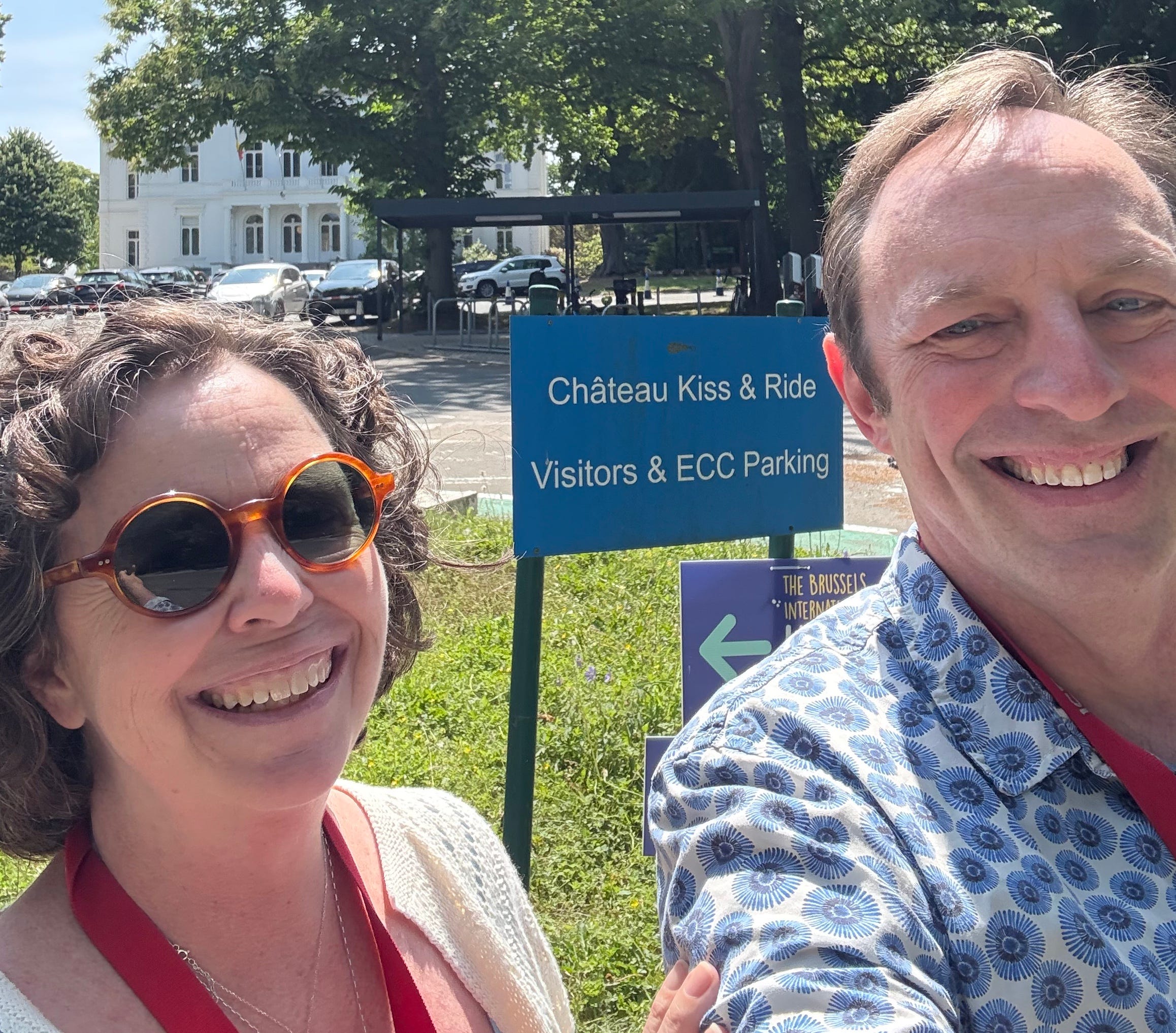
2025 was also the culmination of a sudden and rapid engagement with the Brussels Theatre scene; during 2024 I acted and assistant-directed, then proposed to direct two shows for two different companies, got them both approved, and threw myself into them. This undeniably softened the landing as I exited teaching in June. This memoir details the highly significant milestones of my own personal 2025.
As this year started, I returned to the challenge of acting a masterpiece of a Shakespearean role, for the first time since playing the Fool in Lear with Washington Shakespeare Company in the early 90’s. Since then I’ve stayed immersed in the material as an adaptor, director, and teacher, and read dozens of books on Shakespeare and his era that enriched my understanding, but for some reason I stopped performing it myself. What a rush it was, and how familiar, how surprisingly easy to get it right despite the complexities of Cassius.
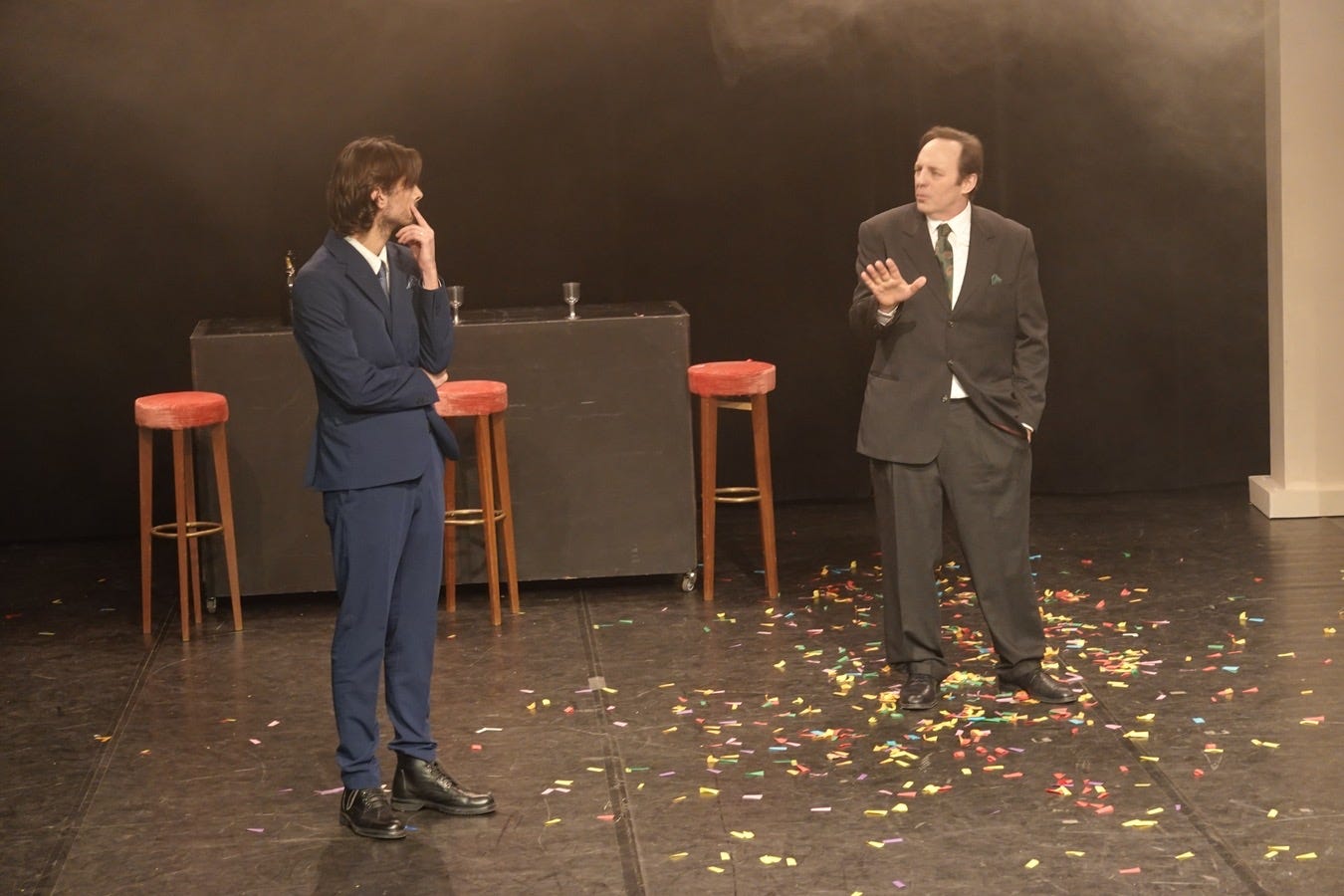
The production was struck through with ingenious paradox, notably the director’s abandoning of Brutus as a wise and noble hero, and her total decimation of the climactic suicides that top off and ‘justify’ the play’s toxic-masculine strain and the protagonists’ stream of missteps. Instead, in Emily Bowles’ cut-down-to-the-bone ending, Cassius–Mr. monologist, and always Mr. one-move-ahead–is at a loss for words in his final moment, and alone with nobody to say them to anyway. His gifts and reason leave him as he decides he has no moves left, and nobody left to blame but himself for the utter mess of the war he’s allowed Brutus to escalate, realizing too late that Brutus has lost it himself.
So my now-blink-of-an-eye death scene (the most challenging moment for me and the character alike) needed to be played out without the use of our superpower of speech (and that was all before I literally lost my fucking voice!) Throughout rehearsals I felt extremely vulnerable in this painfully tiny scene about a significant life ending with a pointless death; I’m pretty confident that vulnerability came right through to the performance!
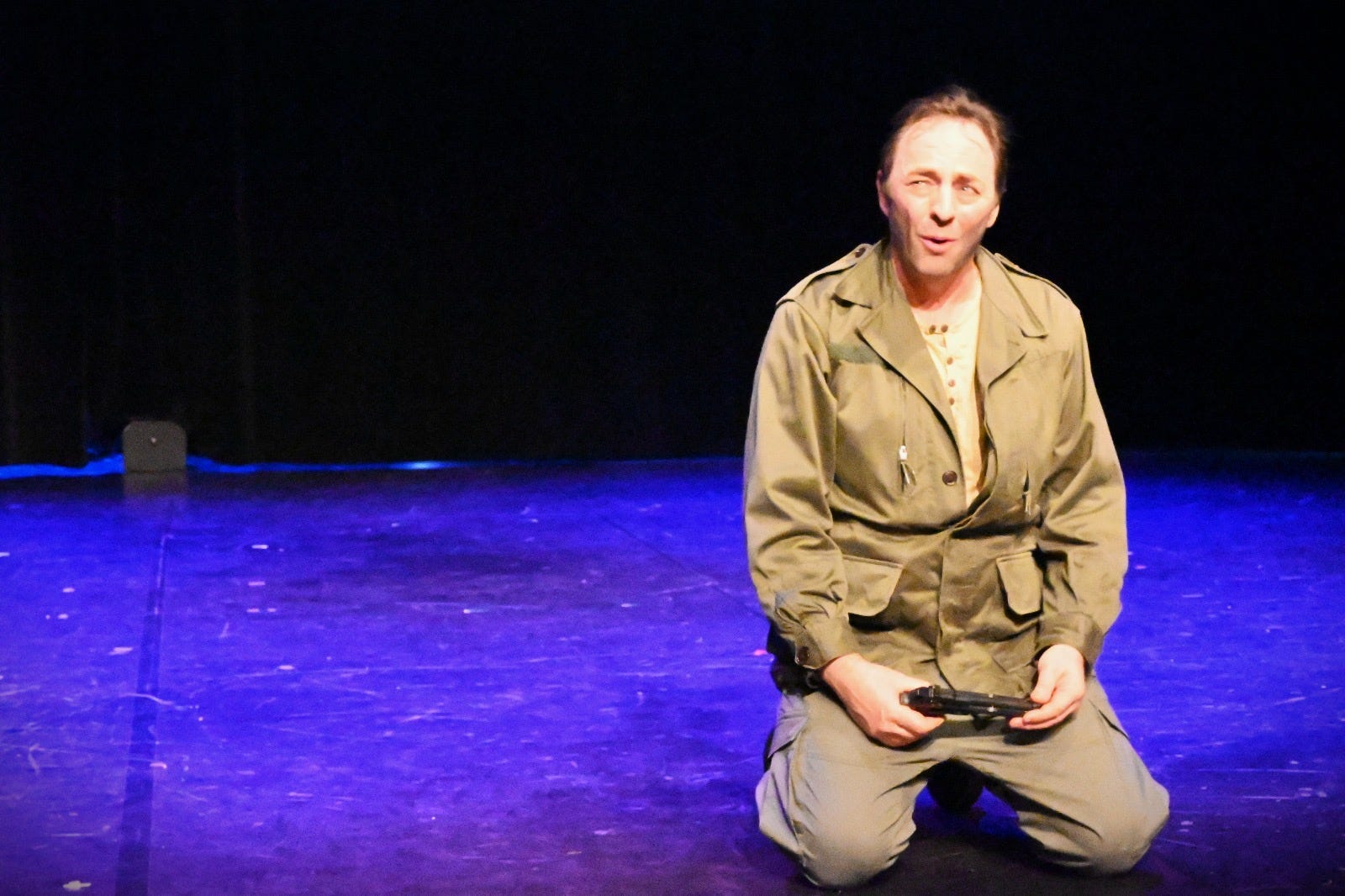
That scene was followed by Brutus’ suicide scene, but there the text was even more shredded and reconstituted in such a way that he too dies alone, except for the mute apparitions of his regrets–not just Caesar but Portia and Cassius, all of whom have died because they loved and believed in him but could never really know him. I felt Emily’s idea–this Lady M-scale mad monologue made from scraps of honor and delusion–not only blew up the play’s dusty male honor-death myth, but successfully left the audience in a stunned state of dissatisfaction, shaken and right on the edge of epiphany.
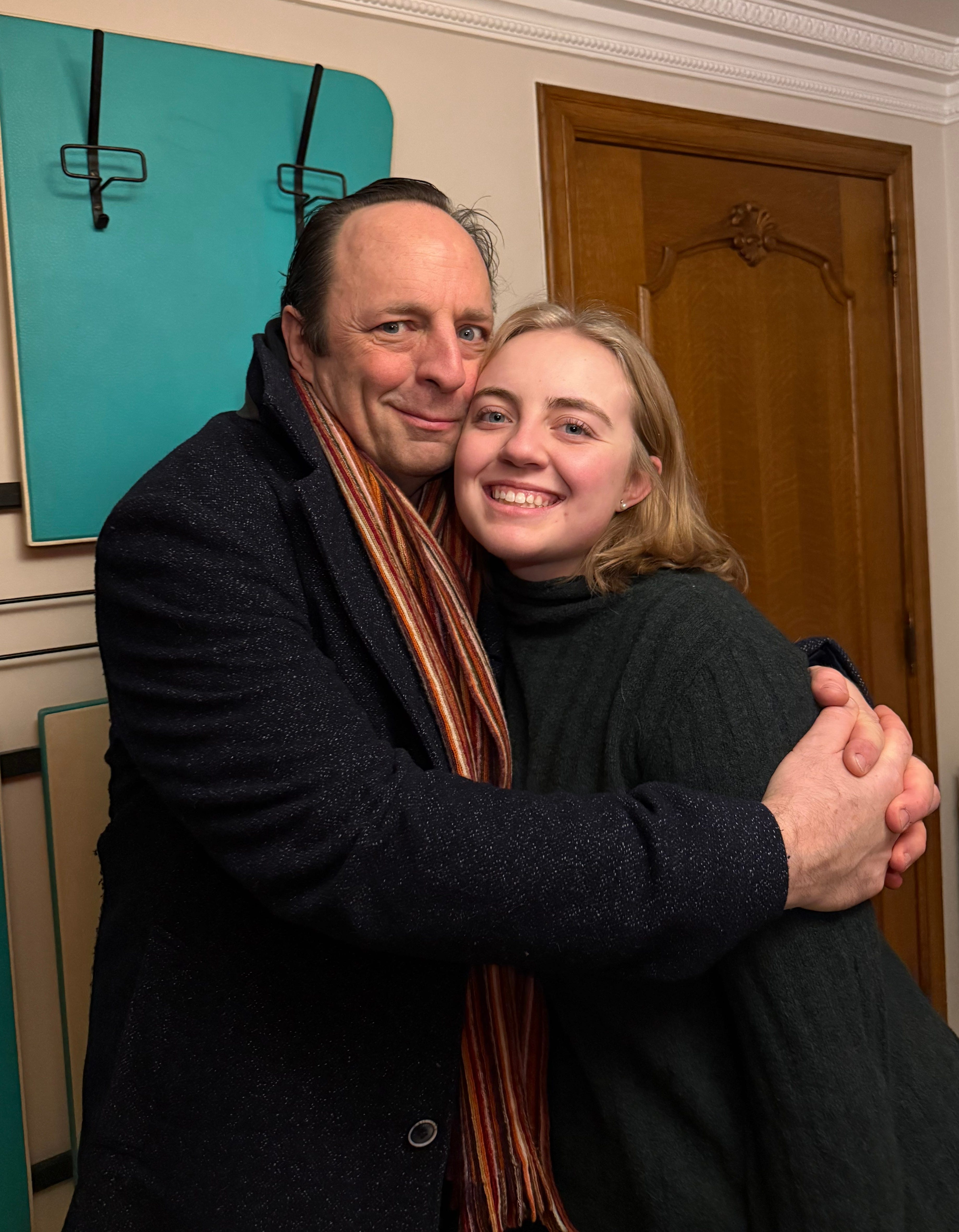
The return to acting was a powerful moment for me personally, and to my profound delight both of my kids understood that and came all the way to Brussels to see it (as did Janan and Andrew, and some very kind ISB colleagues). Paloma even surprised me and positively made my week, defeating my misery at being down with a ridiculous cold giving me laryngitis for the first performance. Thankfully my family waited and saw the show at closing, but I never got back to 100% even then. Still despite that mishap: Caesar was a profoundly rewarding experience: a formative one in fact, a reminder that we keep learning and growing right into old age, if we make the effort.
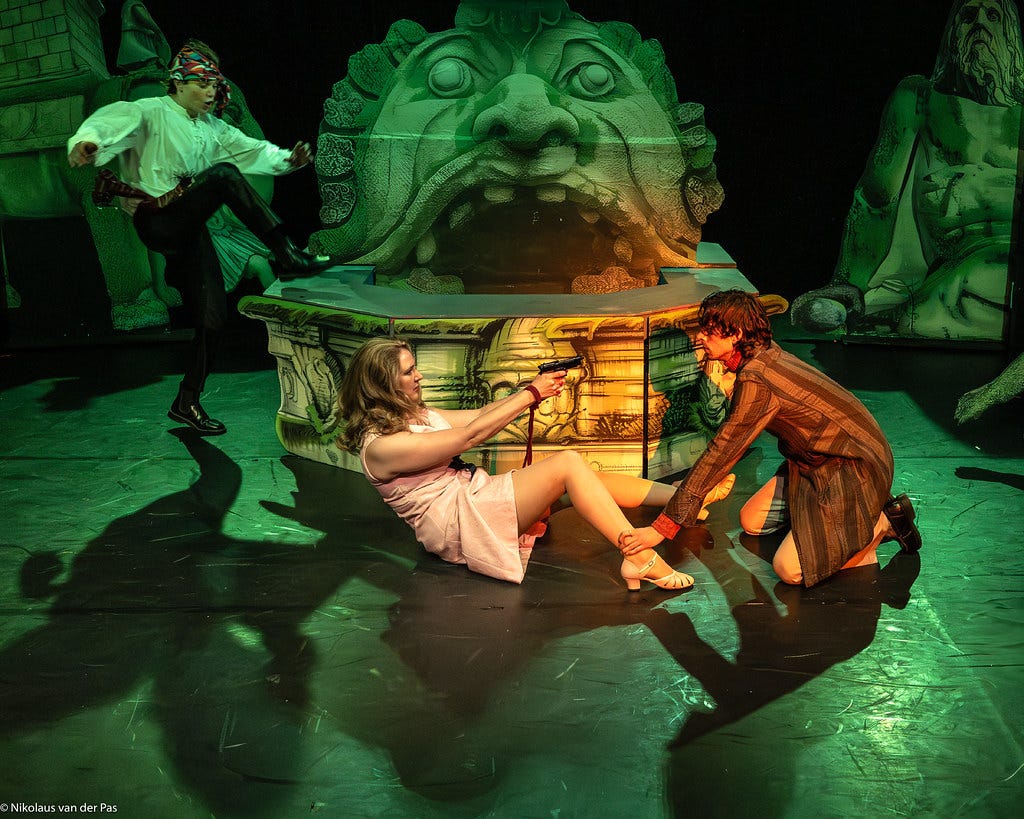
Amazingly, that was just January. From there I jumped right into directing an equally significant though mostly much lighter show, Two Gentlemen of Verona. By day I was still going to school, completing my last semester of 36 years of teaching. I had wound down much of what bound me to the school: I was teaching to the letter, no longer directing school plays, and had let go of the student leadership program I had built over the prior four years. Nor did I spend much time in the staff room, even to eat lunch with my colleagues as I had enjoyed in years prior.
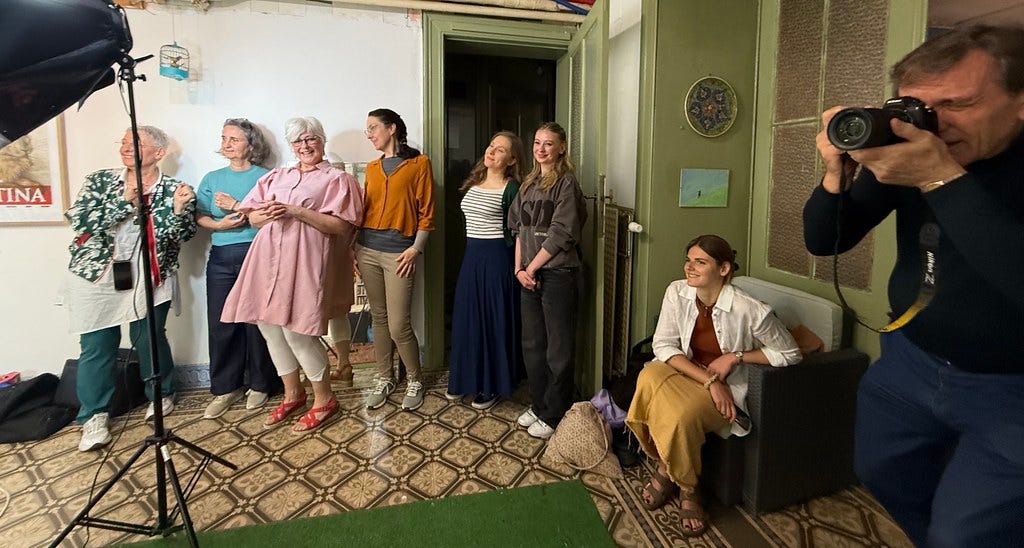
Instead I worked on Two Gents. There was tons of admin to do: finding and dealing with the venue and rehearsal spaces (with French vocab I had to learn on the fly); casting and negotiating schedules (and regularly slammed with mishaps or just boldfaced truancy among the cast); recruiting a huge design team to bring the retro look of hair, makeup and costumes to life, then getting the cast into multiple photoshoots (amid ever more hair-pulling scheduling conflicts!), all to feed a truly amazing PR campaign, and all made possible through Brussels’ legendary culture of theatre volunteerism. Yes, even the gifted photographer and graphic artist worked for free. A humbling tidal wave of support that left me wondering if this wasn’t superior to the ‘professional’ theatre I was part of in the US.
And then there was the set. I poured the many free hours I now had at school into creating one of the most complex sets I’ve ever made, notably designed to be easily stored (in a compact space ISB’s sceneshop kindly afforded me); easily transported; and assembled like a kit in an hour–a process I practiced at ISB a couple times before disassembling it and taking it to the venue. The cast and crew really rallied around using it, making real the magical ‘instant’ transitions I had imagined. The set was made of all-flat wooden scenic components that rolled and flipped on and off stage using old-time techniques, referencing early forced-perspective proscenium staging. I built it using mostly scrap wood and hardware from around the ISB shop, and a couple new techniques I ‘invented’ for myself: creating images in photoshop, stylizing and blowing them up using AI, printing them on a very large scale printer at the school (yes the show budget paid for paper and ink!), and finally pasting them onto huge, flat plywood cutouts.
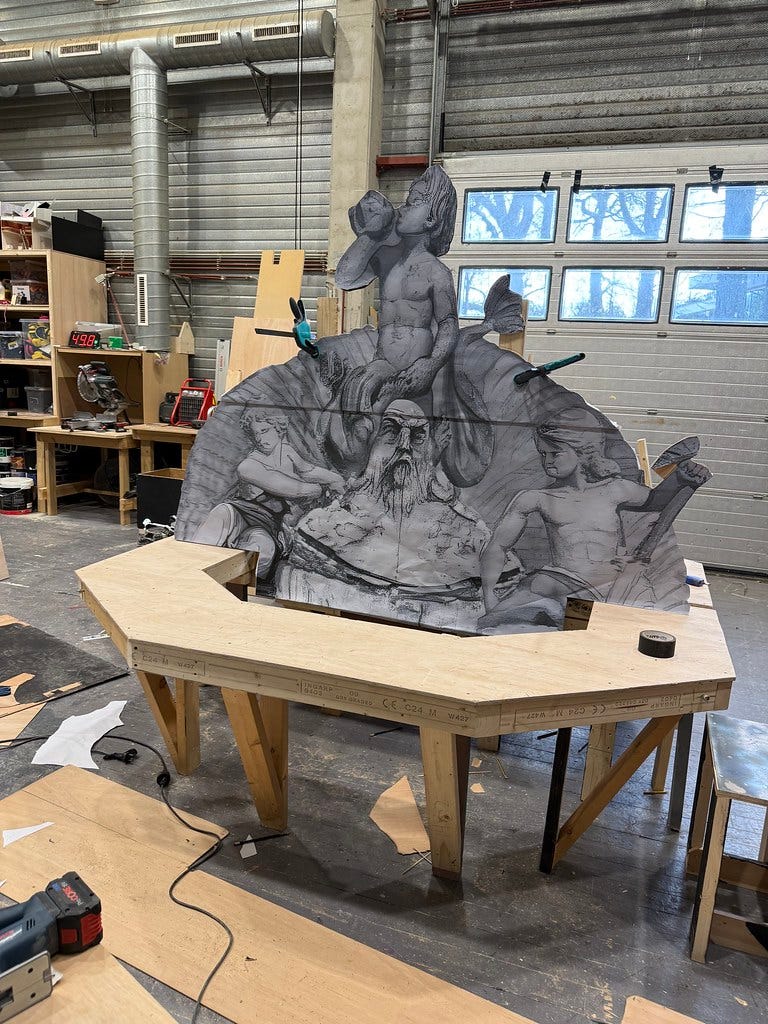
It came out very close to what I’d dreamed of: complemented, defined, enhanced the play’s three environments, and even won an award! Indeed the show swept a number of categories in the community awards which are at once a sincere tribute the community gives among peers, and a goofy affair that all know better than to take too seriously (self-deprecatingly called the Butties). They tend to be skewed like the Oscars by a show’s placement in the season: note that mine was the very last of the year and its successes very fresh in the community’s mind for the end-of-season voting. A case in point of this injustice: Julius Caesar was nearly totally passed over, even for nominations: more or less erased in theatre goers’ emotional memory by early Summer.
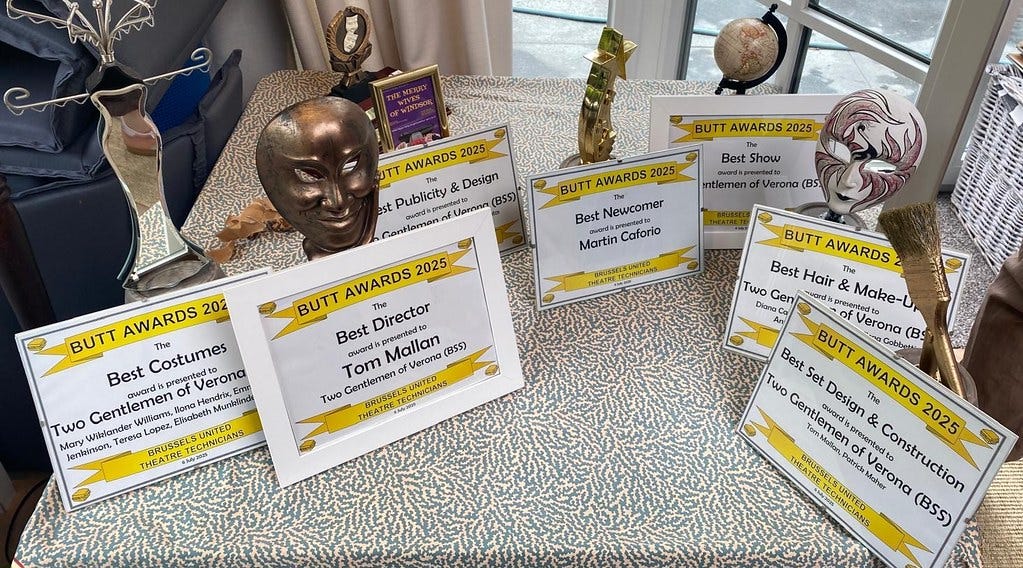
The set was not Two Gents’ only star. Besides excellent performances by the cast, the production team was a dream. A new favorite collaborator, Mary Wiklander-Williams, outdid herself with handmade 60’s dresses and costuming that in their craftsmanship were at or above the level of anything I’ve ever had in my shows, even the work of the brilliant Rhonda Key. I also was lucky enough to have Emily–yes the director of Julius Caesar–on the team, as choreographer of the dance sequences so essential to setting the period and helping fill the play’s infamous plot-holes as Richard Dorton had 30 years before. She also saved me by stepping in and taking over coordination of publicity when it was not getting done, and I had no bandwidth for it.
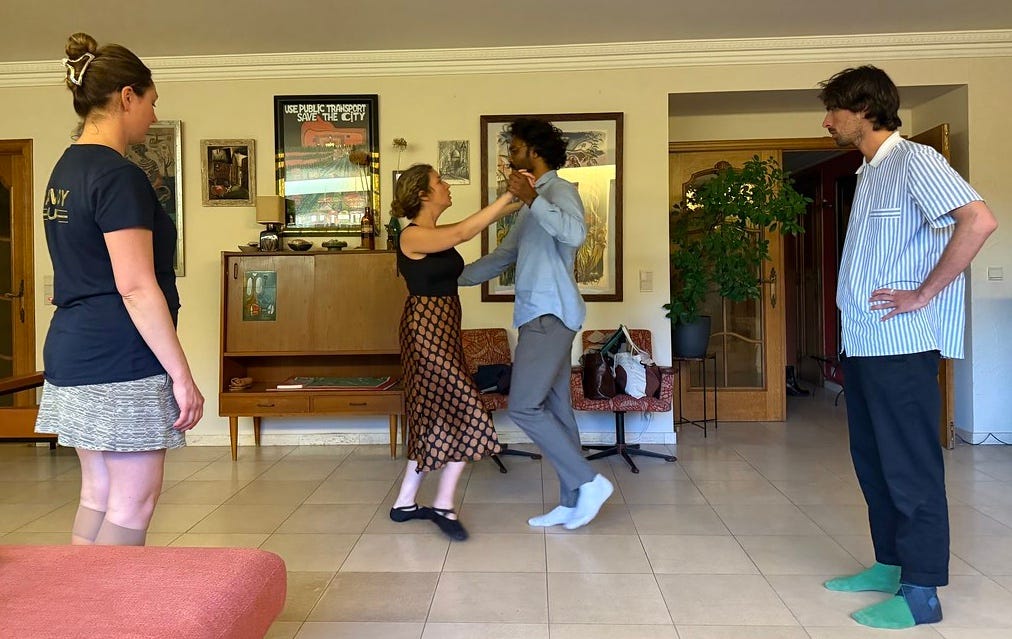
Of all the show’s accomplishments, I was probably proudest (and learned the most) from working, for the first time, with an intimacy coordinator. Cath Howdle and Cat Harris taught the cast and especially me so much, about how to make safety and consent primary. Rather than hampering the storytelling, the approach consistently enhanced it, and left everyone’s mental health and trust intact, even through challenging rehearsals and performances.
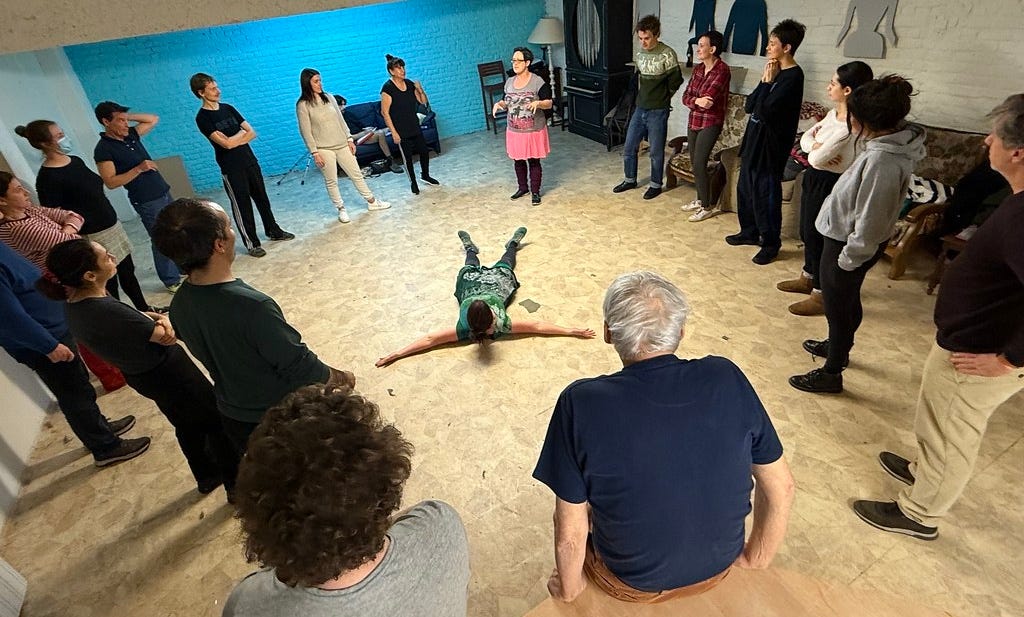
We had just such a challenging performance when the amazing actress playing Silvia, a reliable tower of strength through the process was betrayed by her sciatic nerve. She went downhill as she powered through performances from Tuesday to Friday, but by the Saturday matinée we found we needed an understudy. And we didn’t have one. That’s right, no safety net, no options…except: EMILY saved me and the show AGAIN.
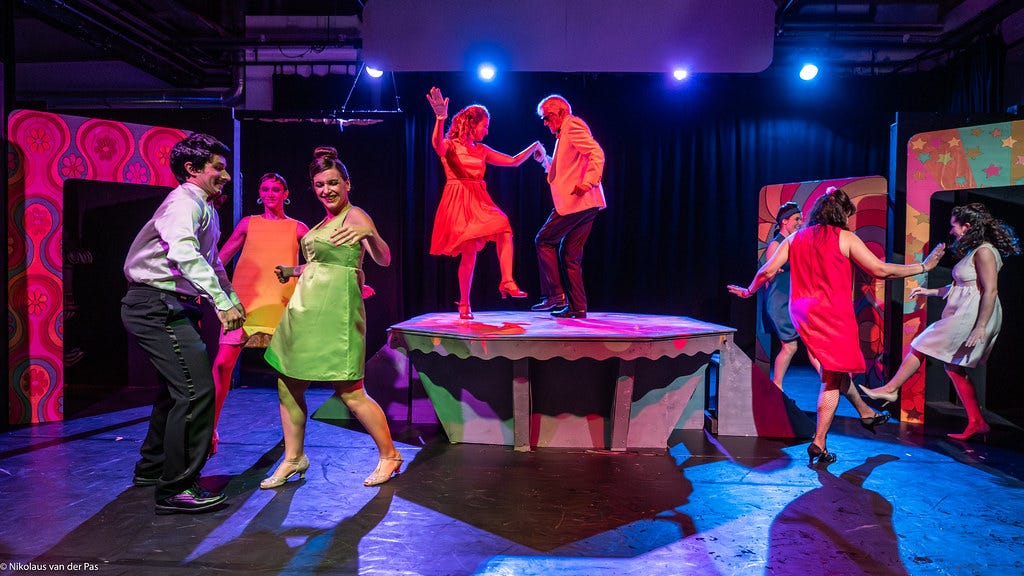
Somehow the team kept its head and rallied around her. All morning long, Mary built and adjusted the costumes; the cast guided Emily through the blocking; I cut her lines way down; the props team made notebook and magazine props with cheatsheets of her script pasted all over them. And Cath and scene partner Jo managed to get her up to snuff in record time so that the sexual assault scene was as convincing and striking–and safe after an hour–as it was for Becky after months of work on it. And Emily was of course the only person in the world who could have pulled off Silvia’s dance scenes without even practicing. Between the gift she gave me in the role of Cassius and the multiple ways that Two Gents wouldn’t have happened without her, I’ll be reflecting well into the new year about how much Emily’s collaboration meant to my 2025!
I was very proud of the show, of course, and very touched by the audience’s appreciation of the work. I was moved by the personal full circle that the show represented in my directing career: Two Gents was the first play I acted in professionally in 1989, the first play I directed professionally back in DC in 1995 (with similar success), and now my directorial début in Brussels. It’s not the playwright’s greatest work, but it’s turned out to be his most significant in my life; I guess you can’t really pick ‘your’ plays any more than you can pick ‘your’ students.
And somehow it occupied my mind and energy as my teaching career–which had at one time been prolific, innovative, even inspired–ended not with a bang but a whimper. Maybe that was inevitable, and I was fortunate to have this creative juggernaut to distract me from the slow-motion deflation. I was even luckier in the hope the show gave me: that I was nowhere near done working, just because I was done with this particular workplace.
When the schoolyear and the theatre season alike were behind us, Trish and I went home as always to New York and Maryland, and then in August…didn’t go back to school!
Instead, we went on a 10 day trip to the UK, and I experienced the Edinburgh Fringe for the first time, just for a couple days. Just long enough to help flyer a Brussels friend’s show, Yellow, on the Royal Mile for a few hours. The same Cath that taught me so much about intimacy coordination was there too, to teach me about the Fringe (and flyering). I rode a 48 hour roller coaster through first despairing that I could never achieve this great an effort with a show of my own, and then, a day later deciding I was very much going to do it, and the very next year no less, with the help of these same friends who took Yellow there in 2025. This decision left me with a much more complex challenge ahead of me for the fall: Homunculus–Santi’s 55-minute one-act I was set to direct in April at the Warehouse blackbox–had gone from being a local production to a ‘European tour.’
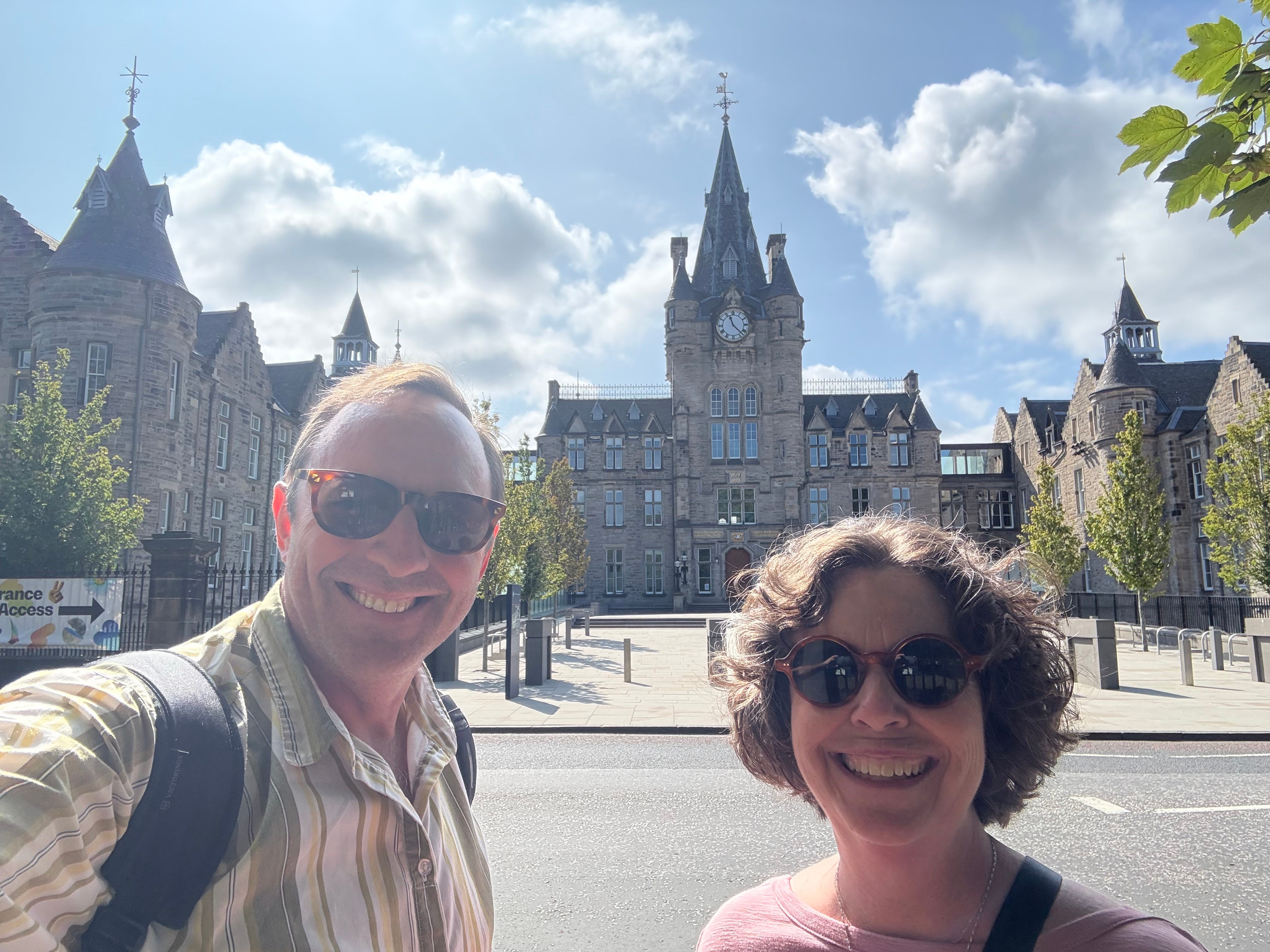
Bringing a show to Edinburgh is on many American theatre artists’ bucket lists, but near impossible to achieve, not because their shows are lacking but because of airfare being added to already surge-priced accommodations. Brits can drive or train there, of course; even amateurs and students can afford to take a little vacation leave to be a part of it. Thanks to Yellow, I realized that actors from Brussels can get there with about the same degree of effort as bringing a show there from London.
That effort is still considerable: the year of pre-admin– seeking a venue along with arranging accommodations and transit–and the likelihood of losing money even if a production sells tickets, are more reasons that not just Americans have to let the dream go.
So knowing this might be my only time to check this item off the list, and with a firm belief that Homunculus could do as well with a Fringe audience as I saw it do in New York, I made a decision that a full 3-week run was necessary, and only possible if I double cast every role. ‘Setting the show on hard’ in this way, as Cath called it, required a lot of advance planning.
The producing company ECC is occupied throughout the year by its legendary, gargantuan January panto event, bound to dwarf the Fall and Spring blackbox shows in terms of the company’s collective focus. That said the panto funds ECC’s other efforts, for example subsidizing a summer theatre camp they run. And in the case of Homunculus, the board took the stunning step of pledging all(!) net proceeds of the show’s April run to help cover expenses in Edinburgh, effectively bringing my personal risk near to zero. This was decided in September, at a meeting I zoomed into from a ferry crossing from Sardinia to Rome (but that’s another story). When they calmly voted to hand the show thousands to cover Edinburgh production costs, I was humbled, thrilled, and had just enough presence of mind to think: ‘shit, now we really are going to Edinburgh.’
And that was just September. Meanwhile in September Trish and I did something else totally unheard of, for a couple of teachers: we didn’t go to school. This was truly the moment that we finally registered, finally believed, that we had retired. Like we had in1992, we set off southward in our minivan with no fixed destination but a vague plan to get to the West Coast–of the Adriatic this time but still the parallels to the last time we quit teaching together were present in our minds.
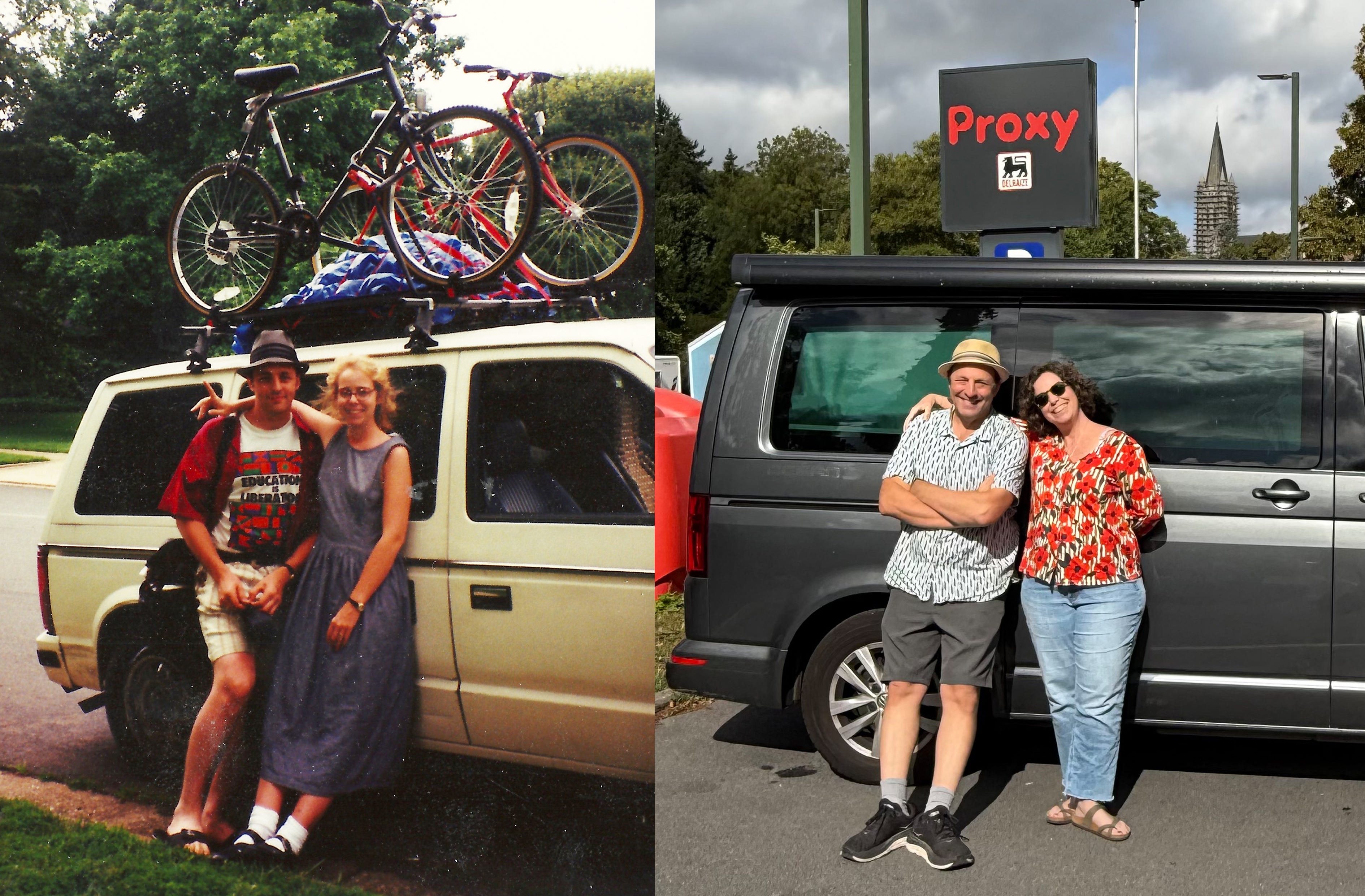
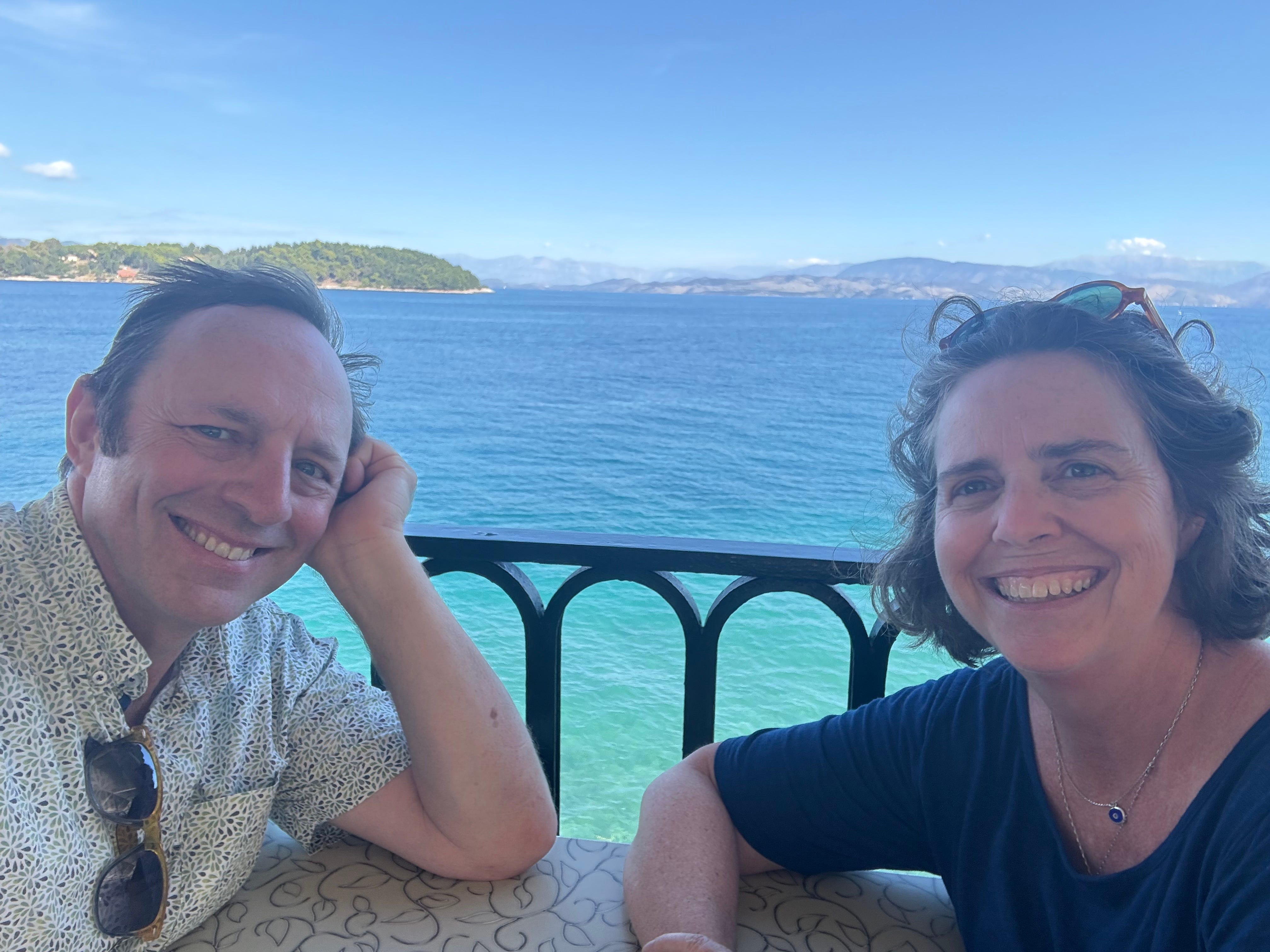
We drove to Provence, on to Sardinia (yes, boat required), then across Italy to Puglia and on to Croatia, Montenegro, Albania, Greece….We camped every night, often right on the coast, as in Corfu where we kept extending our beach campground stay because…we could! Eventually we turned north again, taking in the Balkans, Austria, Germany and Luxembourg on our way back. Swimming in the Adriatic in September, relaxing completely, staying out on the road for a full month, the freedom was the highlight even more than what we saw, heard and ate. We got the distinct impression that our retirement might be real.
In October I came back to Brussels and cast the show. There is a deep reserve of talent in this scene and as expected finding two people for each part was not hard. Defining the rehearsal process–like whether the week-1 cast wanted to watch as the week-2 cast rehearsed their scenes and vice versa, whether I wanted to control or standardize their two interpretations, and to what extent each actor should be expected to rehearse with scene partners from the ‘other’ cast–that has been a wild challenge that the cast and I are enjoying but are definitely still figuring out as of this writing in January 2026.
Once again I started singlehandedly building a set from scrap–this time ancient stretched-canvas flats unearthed in the stock of the storied Warehouse Studio Theatre. I’d never worked with this medium though the technology was still around when I acted in high school. It’s cool but different from wood. I cut these towering two story canvases down to 1x2 meter flats, and turned them into an accordion-folding affair (including attached flip-down shelves that also brace them from in front).
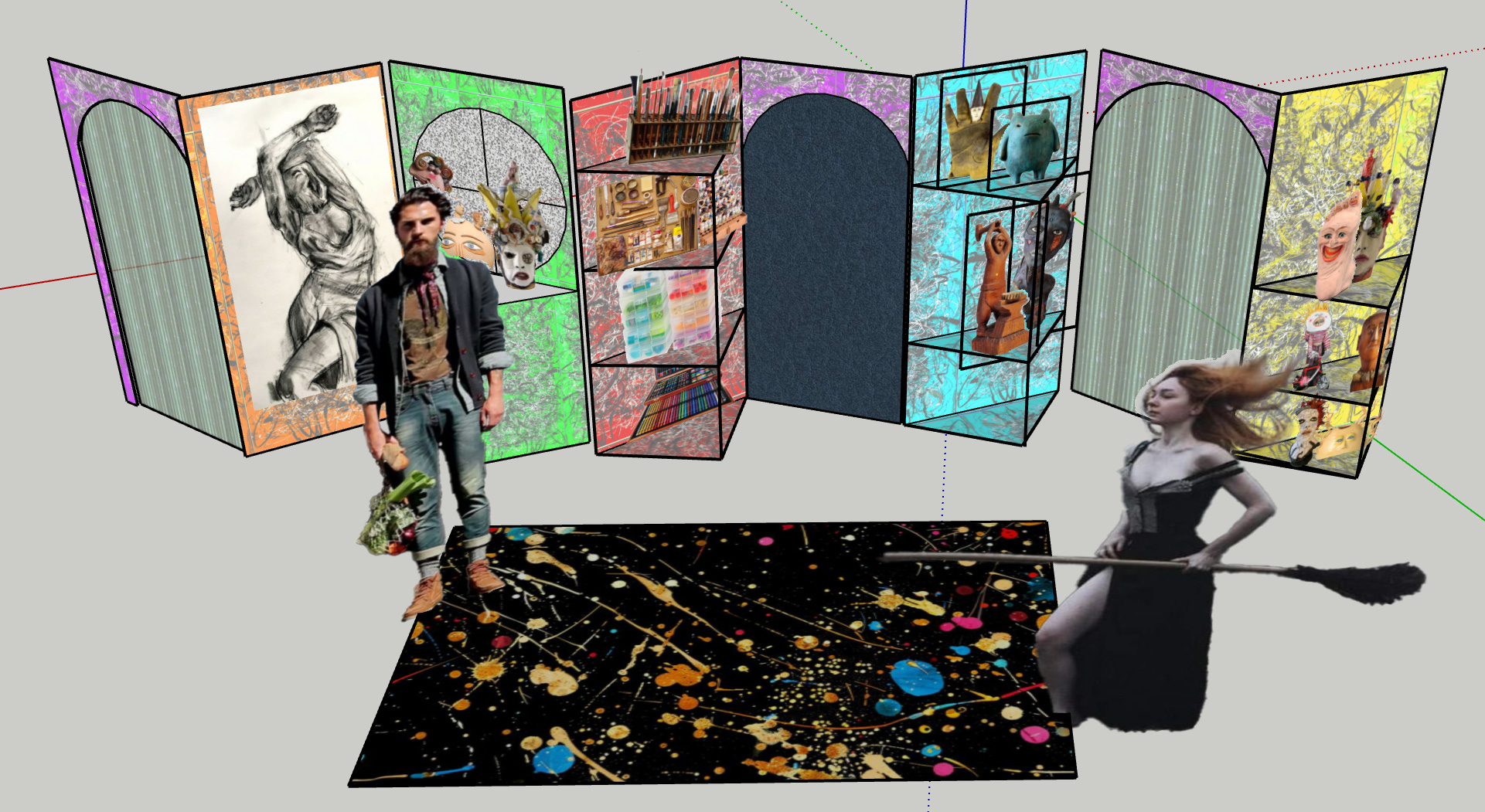
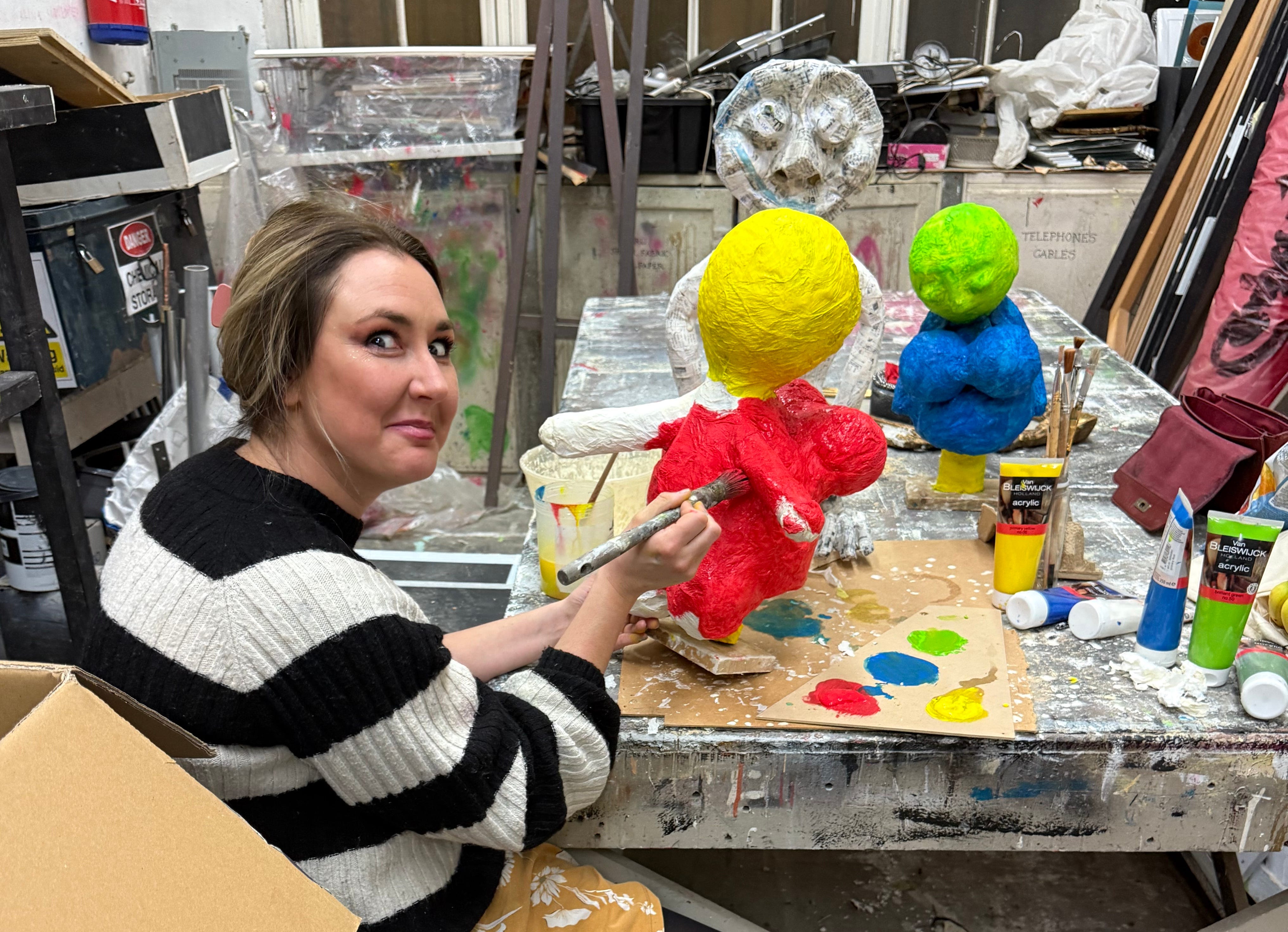
It’s designed to fit neatly in my car and in the limited storage of an Edinburgh venue, and also for a cast to put the whole thing up in a 5 minute turnaround. I also started to recruit artists from the cast and crew to help decorate the set with the ‘jejune’ folkart that drives the play’s plot. There are some REAL ringer artists in this cast, notably Becky who plays the phony artist in the play (her assistant makes all the work). Ironically in real life it’s Becky playing Cyrano and thanklessly making the art for someone else to claim credit for!
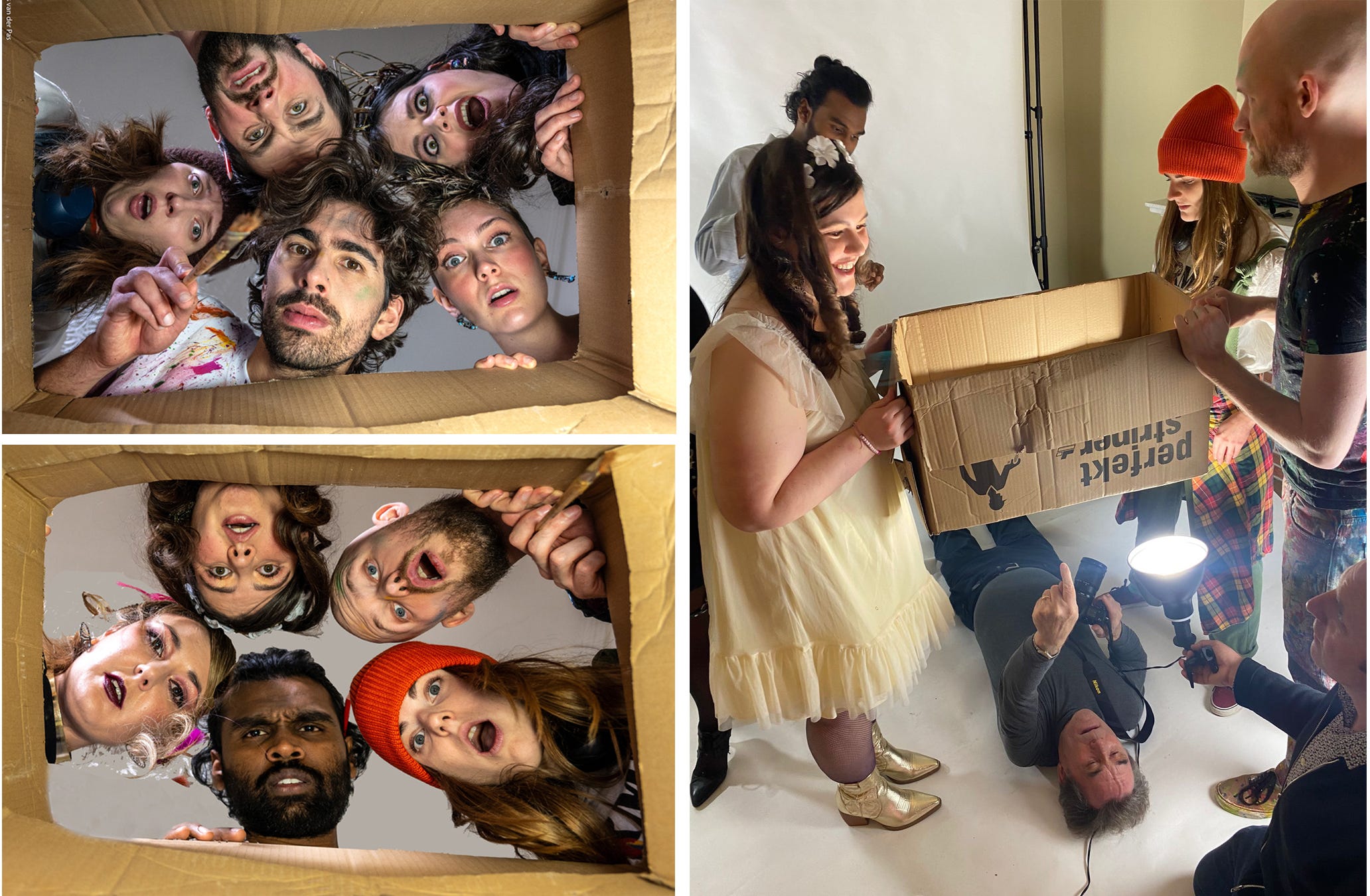
And once again a VERY early character design process started, culminating in another photoshoot in full makeup, hair and costumes: God, we have incredible designers in this community. They had it all ready FIVE! months before the show, allowing us to capture images of characters, relationships and scenes we hadn’t even rehearsed yet (don’t tell anyone). All to give me a visual arsenal, before Christmas, not only for selling the April run in Brussels, but for reaching out to venues in Edinburg.
This application process required not only visuals but a social media presence for the show (which I spun a little bit every day, till the little account topped 125 followers in time for the app’s). Also necessary: tiny supplemental essays, not unlike the college application process, promoting the show as worthy of the most curated venues. These essays were written generically and provided copy for a colorful website and a pitch deck that established a visual as well as verbal brand. Then the essays were modified for each specific venue’s questions: they ask similar ones to each other, but alas there is no common app. A burst of effort very early in the process but at least we now have the bulk of the design and PR work done before the rehearsals get intense!
I worked on all this PR material while Trish and I traveled to the US at Thanksgiving, and again in Seville over Christmas. Yes you read right: 2025 was the year that Trish made a change to our routine, nearly unbroken in 35 years (60 in her case!), of spending Christmas with the Killeleas in Annandale and Annapolis. For only the 3rd time in three decades, we used the Christmas vacation to travel. This was a special boon for Paloma, who hadn’t had a Summer vacation this year, but also a milestone for us: teaching overseas had always made Thanksgiving travel to the US impossible, and the horrors of Christmas travel unavoidable, regardless of whether every member of the family enjoyed either the travel, or even the holiday traditions (ahem).
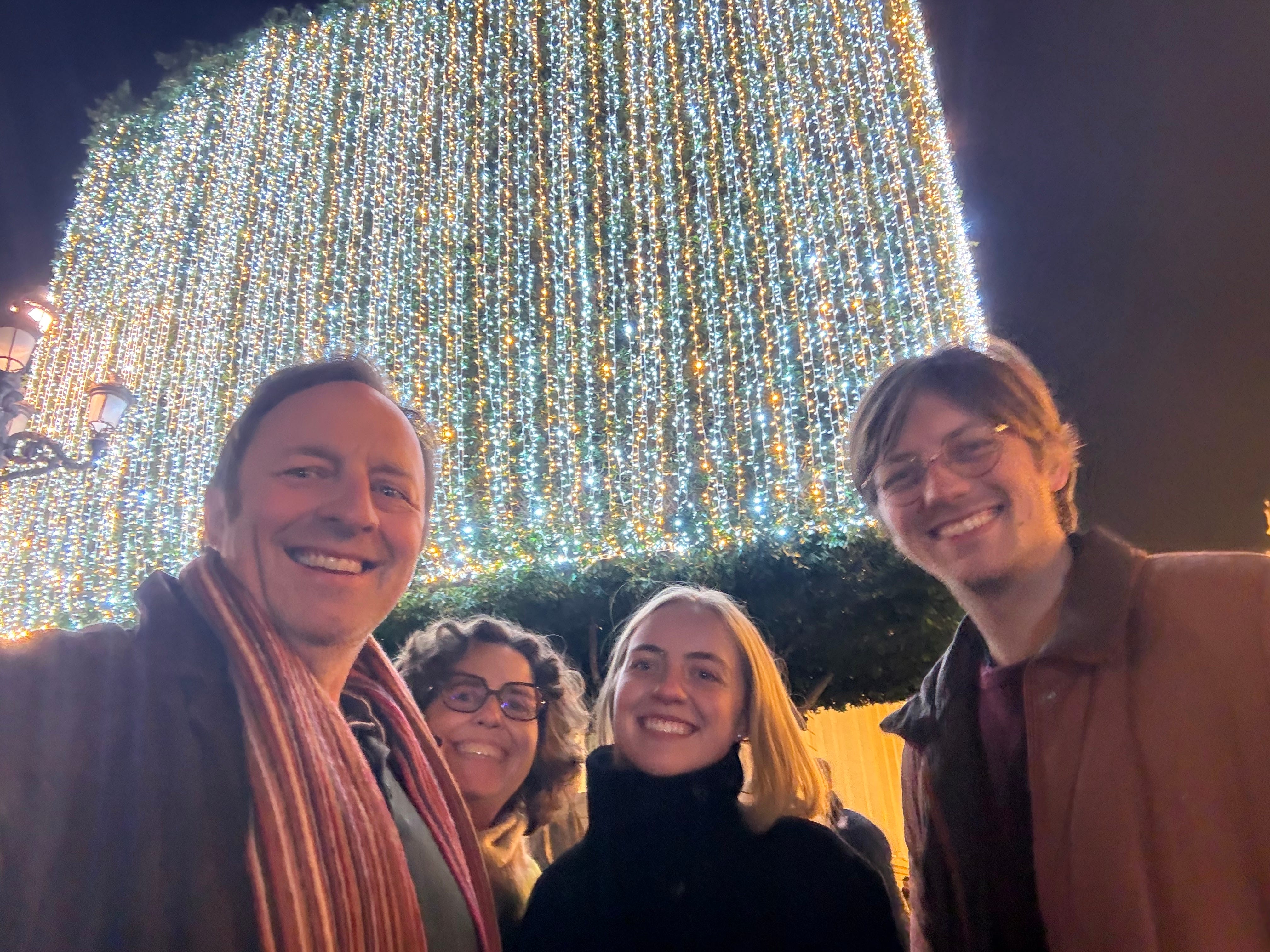
The Seville trip was the perfect culmination to the year. Traveling back to Spain with the kids for the first time since they lived there as children, relaxing, wandering playing canasta and feasting together as the four of us always do, was even more fun than we expected; not half as eventful as the rest of the year but the exact right way to ring it out; taking a breath, reflecting just a little, and appreciating a lot.
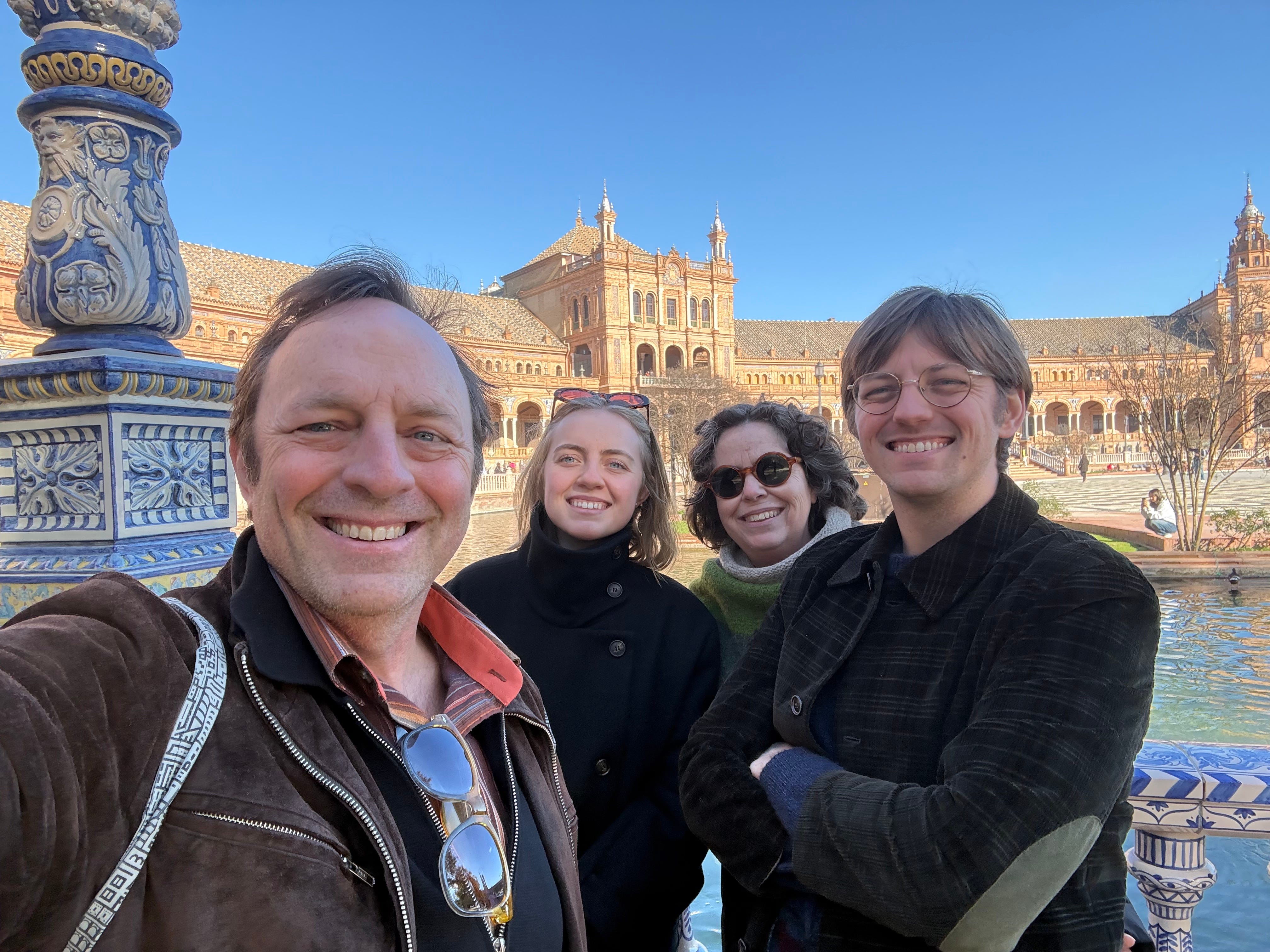
Bringing me to today, January 1, on the brink of what looks to be another very eventful year. Wish me a broken leg or two. With any luck I’ll tell you all about it in January 2027.
This is so wonderful to read! I am inspired by you and Trish in so many ways-- as teachers, parents, travelers, thinkers, creatives-- and I am thrilled for you as you "keep learning and growing right into old age." ;)
A full & fulfilling year it would appear. Enjoy, or may you continue to enjoy, the next stages of your lives.